

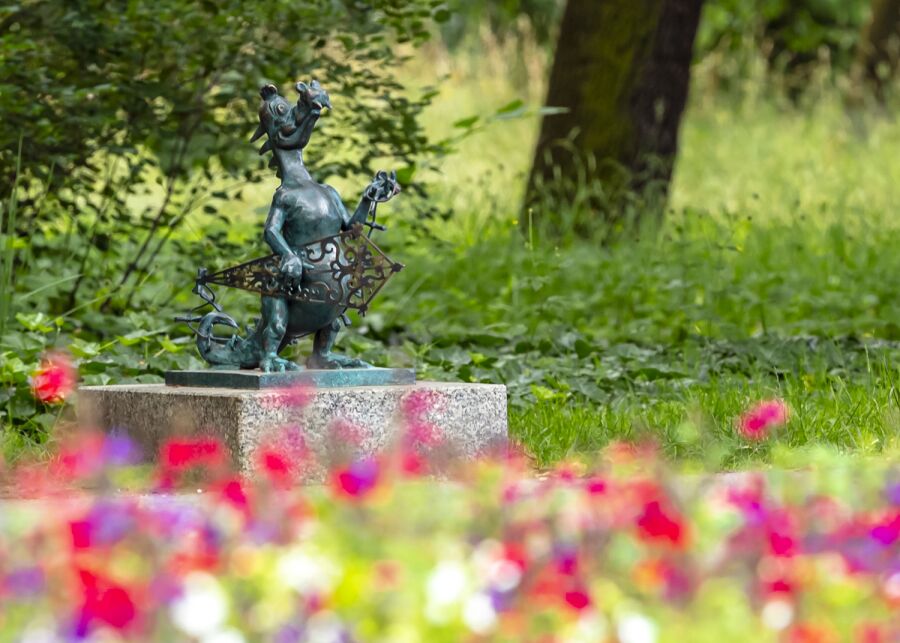
Smok z latawcem – The Dragon with a Kite
| Kategoria: | Smoczy szlak |
| Adres: | Park Jordana, Kraków |
Wśród zieleni w Parku im. dr. Henryka Jordana stoi smok z latawcem, spędzając czas na radosnej zabawie. Wybrał idealne miejsce! Park założył i współfinansował krakowski społecznik, lekarz i radny miejski dr Henryk Jordan (1842-1907). Dzięki dr. Jordanowi, od 1889 r. krakowskie dzieci i młodzież mają możliwość spędzania wolnego czasu na grach i zabawach na świeżym powietrzu. W parku umieszczono także popiersia wybitnych postaci historycznych, aby w czasach zaborów krzewić patriotyzm wśród polskiej młodzieży. Stoi tu również rzeźba niedźwiedzia Wojtka, służącego w armii gen. Władysława Andersa, weterana walk pod Monte Cassino i na froncie włoskim. Właśnie w parku Jordana po raz pierwszy krakowska młodzież zapoznała się z brytyjskim wynalazkiem sportowym – skórzaną piłką, którą należało kopać, aby wbić ją do bramki przeciwnika. Park Jordana stał się inspiracją dla budowy podobnych parków i ogrodów w innych miastach polskich: Warszawie, Lwowie, Nowym Sączu, Sanoku, Jarosławiu. Dziś można w nim korzystać z kilku różnych boisk, placów do ćwiczeń i licznych plenerowych urządzeń gimnastycznych. Malowniczy park pozostaje jednym z najpopularniejszych wśród krakowian miejsc na spacer, sportową aktywność i rekreację.
Z tego punktu można wybrać się na mecz piłki nożnej. Mecze rozgrywane są na dwóch pobliskich stadionach. Warto również wyruszyć w stronę Błoni i wziąć przykład ze smoka: wypuścić latawiec na krakowskie niebo i cieszyć się pięknem tego miejsca.
[ENGLISH]
The Water Dragon with a fish in its claw stands at Na Groblach Square. As the name suggests, there used to be a pond in the middle of the current square, which was also the former Vistula marina. In the Middle Ages, these dikes cut off a wide bend in the Vistula – running from Salwator, through Błonia, towards the Old Town and Wawel – creating numerous fishponds and, in the vicinity, the Vistula marina. The source of the water was the Rudawa stream, for which the ponds and wetlands were one of the outlets; waste from the moat at the front of the city walls also flowed there. Against the backdrop of the pond water and wetlands, the dyke stood out clearly. According to one version of the legend, the Wawel Dragon is said to have drowned in the nearby marshland called "Żabikruk". When the ponds and wetlands were gradually drained, they were replaced by a square where horses were traded every Tuesday. Wooden, single-storey and rather chaotic buildings were erected around it. It was not until the late 19th century that the square changed its appearance. It was surrounded by townhouses and the distinctive building of the Bartholomew Nowodworski First Liceum. Even though the ponds have disappeared, water still frequently enters the area. This is evidenced by a section of the former Royal Brewery, into which three plaques have been embedded. They indicate the water level during the great floods experienced by Krakow in 1813, 1876 and 1903. The brewery building itself was demolished and a hotel was built in its place. Among those who lived in the tenements at Na Groblach Square were the publicist Ksawery Pruszyński and the artist Piotr Skrzynecki. Krakow artists and party guests of the founder of "Piwnica pod Baranami" commemorated the square in their songs. At present, part of the square is used by young people for sports (there is a pitch with a running track), and an underground parking area has also been allocated. Between the two of them, we notice a fish dragon emerging from the pond, a reminder of the long association of water with this part of the city.
Walking upstream on the Vistula towards Aleja Trzech Wieszczów, we will meet another dragon, equipped with a film attribute: the camera.