

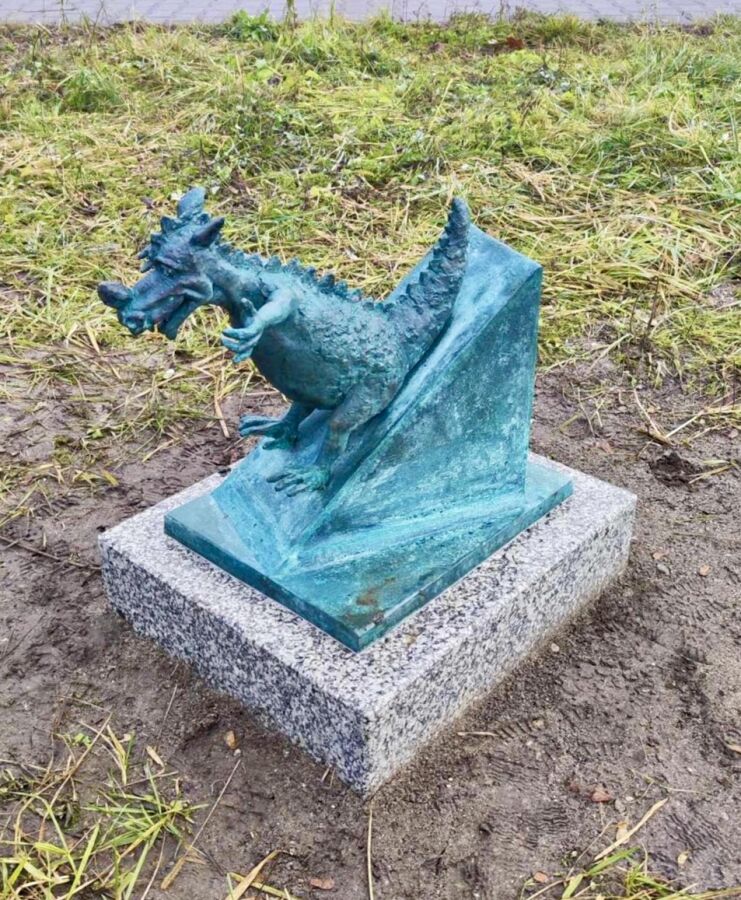
Smok zjeżdżający z górki – The Sliding Dragon
| Kategoria: | Smoczy szlak |
| Skwer Romana i Heleny Husarskich mieści sie u zbiegu ulic Księcia Józefa, Jodłowej i Skibowej (Roman and Helena Husarski Square is located at the junction of Księcia Józefa, Jodłowa and Skibowa Streets) | |
| Adres: | ul. Jodłowa, Kraków |
Smoki są czasem zupełnie jak ludzie. Zwłaszcza młode osobniki doceniają walory sportu i rekreacji. Nic dziwnego, że krakowskie smoki bardzo lubią place zabaw, a szczególnie te, które powstały w ramach programu „Smocze skwery”. Tutejszy smok jest fanem ślizgów i zjazdów z górki na pazurki, stąd nie powinna nas dziwić jego aktywność na zjeżdżalni. Jednak, gdy dzieci idą już po zabawie do domu, smok korzysta także z innych urządzeń do zabawy, które przygotowano na pobliskim placu zabaw. Nie zdziwcie się, gdy usłyszycie smocze śmiechy w czasie, gdy dzieci jeszcze śpią, bo to najpewniej smok zaprasza swoich pobratymców do gier i zabaw.
A czasem, gdy dzieci jeszcze śpią zaprasza na poranne gry i zabawy inne smoki ze Smoczego szlaku. Nie zdziwcie się, gdy któregoś kiedyś nie zobaczycie na swoim miejscu. Pewnie bawi się na tym placu zabaw i wcale nie spieszy się do powrotu.
Jakby znudził się czasem zabawą, to zapytajcie go o patronów skweru i piropikturę. Wymyślili ją krakowscy artyści Helena i Roman Husarscy, którzy mieli niedaleko od tego miejsca swoją pracownię. Piropiktura to dekoracyjna technika ceramiczna polegająca na nanoszeniu płynnego szkliwa ceramicznego na powierzchnię rozgrzaną do wysokiej temperatury. Husarscy byli uznanymi artystami - ich dziełami są m.in. mozaiki na gmachu hotelu „Cracovia” i na budynku KS Korona, a ich prace zdobiły również inne miasta w Polsce.
Skoro już odwiedziliście tego smoka to być może warto też odwiedzić górujący nad okolicą pobliski zamek w Przegorzałach lub rezerwat przyrody Skałki Przegorzalskie?
[ENGLISH]
Dragons are sometimes just like people. Younger individuals in particular appreciate the value of sport and recreation. Not surprisingly, Krakow's dragons are very fond of playgrounds, especially those created as part of the 'Dragon Squares' programme. The local dragon is a fan of sliding and clawing his way down the hill, so we should not be surprised by his activity on the slide. However, when the children go home after playing, the dragon also uses other play equipment that has been prepared in the nearby playground. Don't be surprised if you hear dragon laughter while the children are still asleep, as this is most likely a dragon inviting its fellows to play games.
And sometimes, when the children are still asleep, he invites other dragons from the Dragon Trail for morning games and activities. Don't be surprised if you don't see any of them in place at some point. He's probably playing in that playground and not at all in a hurry to get back.
As if he gets bored of playing at times, ask him about the patrons of the square and the pyropictura technique. This was invented by the Krakow artists Helena and Roman Husarski, who had their studio not far from the site. Pyropictura is a decorative ceramic technique involving the application of a liquid ceramic glaze to a surface heated to a high temperature. The Husarskis were renowned artists – their works include mosaics on the 'Cracovia' hotel building and on the KS Korona building, and their works also decorated other cities in Poland.
Now that you've visited the dragon, perhaps it's also worth a visit to the nearby Przegorzaly Castle towering over the area, or the Przegorzaly Rocks nature reserve?