

Centrum Administracyjne Huty
| Kategoria: | Nowa Huta na Europejskim Szlaku Kulturowym ATRIUM |
| Adres: | ul. Ujastek 1, Kraków |
Centrum Administracyjne Huty (1952−1956, proj. Marta i Janusz Ingardenowie, Janusz Ballenstedt), ul. Ujastek 1
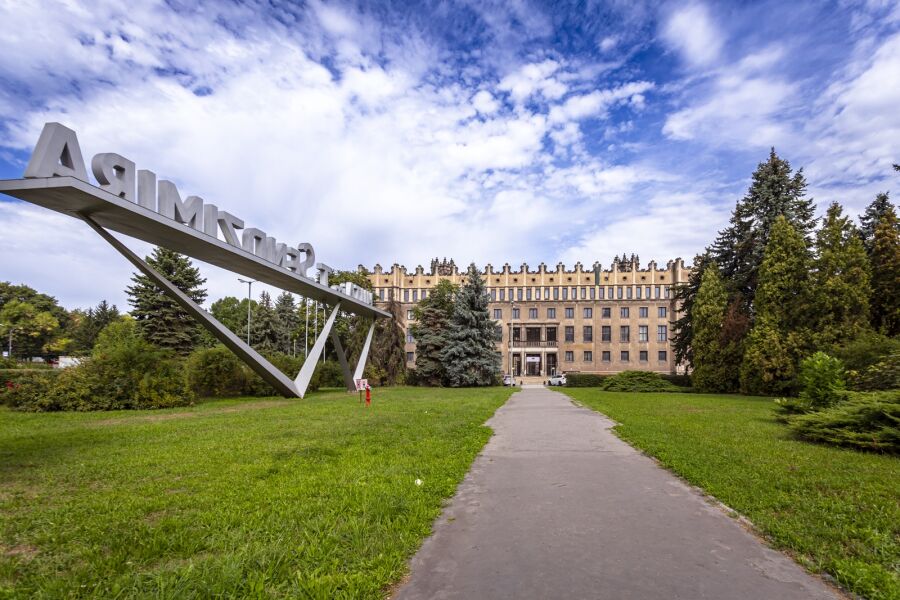
Imponujące bliźniacze gmachy Z i S, zwane „Pałacami Dożów” lub „Watykanami”, powstały jako Centrum Administracyjne Huty im. Lenina i są jednym z najwybitniejszych przykładów socrealizmu w Polsce. Budynki wzniesione zostały w latach 1952–1956 według projektu Marty i Janusza Ingardenów oraz Janusza Ballenstedta. Ich monumentalna architektura, inspirowana renesansem – z attykami, kasetonowymi stropami i bogato zdobionymi fasadami – odzwierciedla ideę „narodowej formy” w socrealizmie. Wnętrza, zaprojektowane przez zespół Mariana Sigmunda, zachowały oryginalne wyposażenie: meble, żyrandole i kandelabry. Pomiędzy budynkami znajdowała się reprezentacyjna brama wjazdowa do kombinatu, a pod gmachem S – schron z zachowanym stanowiskiem dowodzenia na wypadek wojny. Obiekty stanowią kluczowy element urbanistycznej kompozycji Nowej Huty. Budynek Z oraz schrony można zwiedzać z przewodnikiem w wyznaczonych terminach lub po wcześniejszym umówieniu.
[ENGLISH]
Steelworks Administration Centre (1952−1956, designed by Marta and Janusz Ingarden, Janusz Ballenstedt), ul. Ujastek 1
The imposing twin edifices Z and S, known as the 'Palaces of the Doges' or 'Vaticanes', were built as the Administrative Centre of the Lenin steelworks and are one of the most outstanding examples of socialist realism in Poland. The buildings were erected between 1952 and 1956 to a design by Marta and Janusz Ingarden and Janusz Ballenstedt. Their monumental architecture, inspired by the Renaissance – with attics, coffered ceilings and richly decorated façades – reflects the idea of 'national form' in socialist realism. The interior, designed by Marian Sigmund's team, has retained its original furnishings, including furniture, chandeliers and candelabras. Between the buildings was the representative entrance gate to the steelworks combine, and under the S building was a shelter with a still extant command post in case of war. The buildings are a key element in the urban composition of Nowa Huta. The Z Building and the shelters can be visited with a guide at designated times or by appointment.
[ITALIANO]
Centro Amministrativo dell’Acciaieria (1952–1956, progetto di Marta e Janusz Ingarden e Janusz Ballenstedt), via Ujastek 1
Gli imponenti edifici gemelli Z e S, noti come “Palazzi dei Dogi” o “Vaticani”, furono realizzati come Centro Amministrativo dell’Acciaieria Lenin e rappresentano uno degli esempi più significativi del realismo socialista in Polonia. I fabbricati furono eretti tra il 1952 e il 1956 su progetto di Marta e Janusz Ingarden e Janusz Ballenstedt. La loro architettura monumentale, ispirata al Rinascimento – con attici, soffitti a cassettoni e facciate riccamente decorate – riflette l’idea della “forma nazionale” nel realismo socialista. Gli interni, progettati dal gruppo di Marian Sigmund, hanno conservato gli arredi originali: mobili, lampadari e candelabri. Tra gli edifici si trovava il portale d’ingresso monumentale del complesso siderurgico e, sotto l’edificio S, un rifugio con un posto di comando conservato per un’eventuale guerra. Gli edifici costituiscono un elemento fondamentale della composizione urbanistica di Nowa Huta. Il fabbricato Z e i rifugi possono essere visitati con una guida in date stabilite oppure su prenotazione.