

Plac Przy Poczcie
| Kategoria: | Nowa Huta na Europejskim Szlaku Kulturowym ATRIUM |
| Adres: | Plac Przy Poczcie 1, Kraków |
Plac Przy Poczcie (1950−1952, proj. Marian Steczowicz)
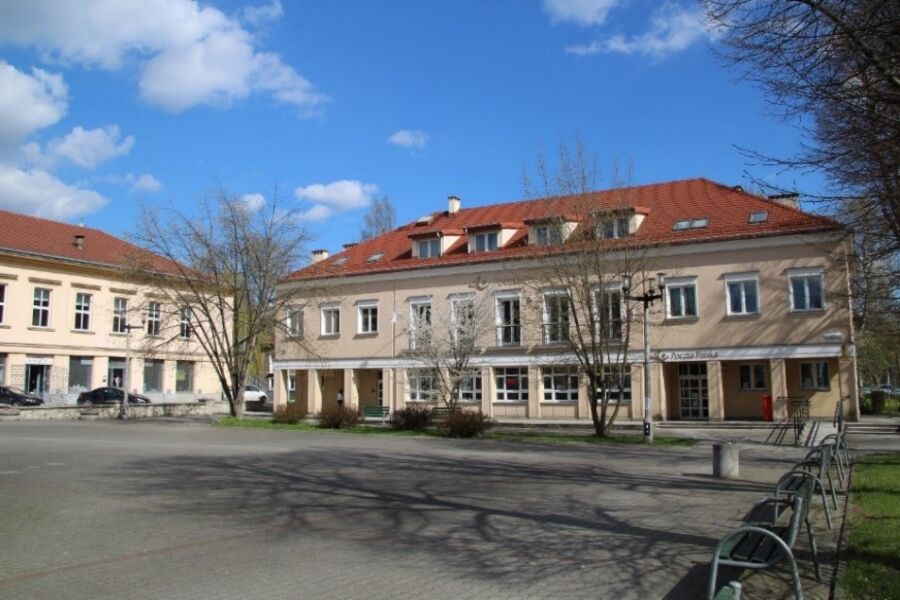
Plac Przy Poczcie na os. Willowym, wokół którego w latach 1950–1952 wzniesiono budynki zaprojektowane przez Mariana Steczowicza, uchodzi za pierwszy „rynek” Nowej Huty i jedno z najstarszych założeń urbanistycznych dzielnicy. Przez chwilę plac nosił imię przodownika pracy Piotra Ożańskiego, którego losy stały się inspiracją dwóch słynnych filmów Andrzeja Wajdy: „Człowiek z marmuru” i „Człowiek z żelaza”. Przestrzeń placu wyznaczają kameralne, trzykondygnacyjne budynki o swobodnym układzie, wybudowane jeszcze przed ostatecznym planem nowego miasta. Jego kluczowymi elementami są gmach poczty, pierwotnie planowany jako klub robotniczy, oraz dawny dom handlowy z lokalami gastronomicznymi, w tym restauracją Gigant – reprezentacyjne obiekty północnej i zachodniej pierzei placu. Wnętrza projektował znany architekt Marian Sigmund, współtwórca Pracowni Architektury Wnętrz ASP. Początkowo elegancki lokal szybko zyskał kontrowersyjną reputację, by w latach 70. odrodzić się jako klub studencki FAMA – ważne miejsce życia kulturalnego Nowej Huty. Plac mieści także budynek uznawany za pierwszy blok dzielnicy, na którym tablicą upamiętniono rozpoczęcie budowy Nowej Huty w 1949 roku. Mimo niewielkiej skali, przestrzeń ta dokumentuje początki i ewolucję urbanistyki socjalistycznego miasta oraz zmienne losy jego społeczno-politycznego krajobrazu.
[ENGLISH]
Plac przy Poczcie - Post Office Square (1950-1952, designed by Marian Steczowicz)
Plac Przy Poczcie on the Willowe housing estate, around which buildings designed by Marian Steczowicz were erected between 1950 and 1952, is regarded as the first 'market square' of Nowa Huta and one of the oldest town planning arrangements in the district. For a while, the square was named after the labour foreman Piotr Ożanski, whose life inspired two famous films by Andrzej Wajda: 'Man of Marble' and 'Man of Iron'. The space of the square is marked by intimate, three-storey buildings with a free-form layout, built before the final plan for the new city. Its key elements are the post office building, originally planned as a workers' club, and the former department store with eating and drinking establishments, including the Gigant (Giant) restaurant – representative buildings on the northern and western frontages of the square. The interiors were designed by the well-known architect Marian Sigmund, co-founder of the Interior Design Studio at the Academy of Fine Arts. The initially elegant venue quickly gained a controversial reputation, only to be reborn in the 1970s as the FAMA student club, an important venue for the cultural life of Nowa Huta. The square also houses a building considered to be the first block of the district, on which a plaque commemorates the start of the construction of Nowa Huta in 1949. Despite its small scale, the space documents the origins and evolution of the urban planning of the socialist city and the changing fortunes of its socio-political landscape.
[ITALIANO]
Plac Przy Poczcie - Piazza Presso la Posta (1950–1952, progetto di Marian Steczowicz)
La piazza Przy Poczcie, situata nel complesso residenziale Willowe, attorno al quale tra il 1950 e il 1952 furono edificati edifici progettati da Marian Steczowicz, è considerata la prima “piazza del mercato” di Nowa Huta, nonché uno dei più antichi impianti urbanistici del quartiere. Per un certo periodo la piazza fu intitolata all’operaio modello Piotr Ożański, la cui vicenda ha ispirato due celebri film di Andrzej Wajda: “L’uomo di marmo” e “L’uomo di ferro”. Lo spazio della piazza è definito da edifici a tre piani, di dimensioni ridotte e a impianto libero, costruiti prima del piano definitivo della nuova città. I suoi elementi chiave sono l’edificio delle poste, originariamente previsto come casa del popolo, e l’ex grande magazzino con locali di ristorazione, tra cui il ristorante “Gigant” – edifici rappresentativi dei fronti nord e ovest della piazza. Gli interni furono progettati dal noto architetto Marian Sigmund, cofondatore del Laboratorio di Architettura degli Interni dell’Accademia di Belle Arti. Il locale, inizialmente elegante, si guadagnò rapidamente una reputazione controversa, per poi rinascere negli anni Settanta come club studentesco FAMA – luogo importante per la vita culturale di Nowa Huta. La piazza ospita anche un edificio considerato il primo blocco del quartiere, sul quale una targa commemora l’avvio della costruzione di Nowa Huta nel 1949. Nonostante le dimensioni ridotte, questo spazio testimonia le origini e l’evoluzione dell’urbanistica della città socialista, nonché le alterne vicende del suo paesaggio socio-politico.