

Nowa Huta na Europejskim Szlaku Kulturowym ATRIUM
W 2024 r. Kraków przystąpił oficjalnie do Stowarzyszenia Atrium. Stowarzyszenie to odpowiedzialne jest za Szlak Kulturowy Rady Europy pn. „Architektura Reżimów Totalitarnych Europy XX wieku”. Nowa Huta stanowi dziś część tego europejskiego szlaku.
🇬🇧 In 2024, Krakow officially joined the Atrium Association. This association is responsible for the Council of Europe's Cultural Route entitled 'Architecture of the Totalitarian Regimes of 20th Century Europe'. Nowa Huta is today part of this European route.
🇮🇹 Nel 2024, Cracovia ha aderito ufficialmente all’Associazione ATRIUM. Quest’associazione è responsabile dell’Itinerario culturale del Consiglio d’Europa denominato “Architettura dei regimi totalitari del XX secolo in Europa”. Oggi Nowa Huta fa parte di questo Itinerario culturale europeo.
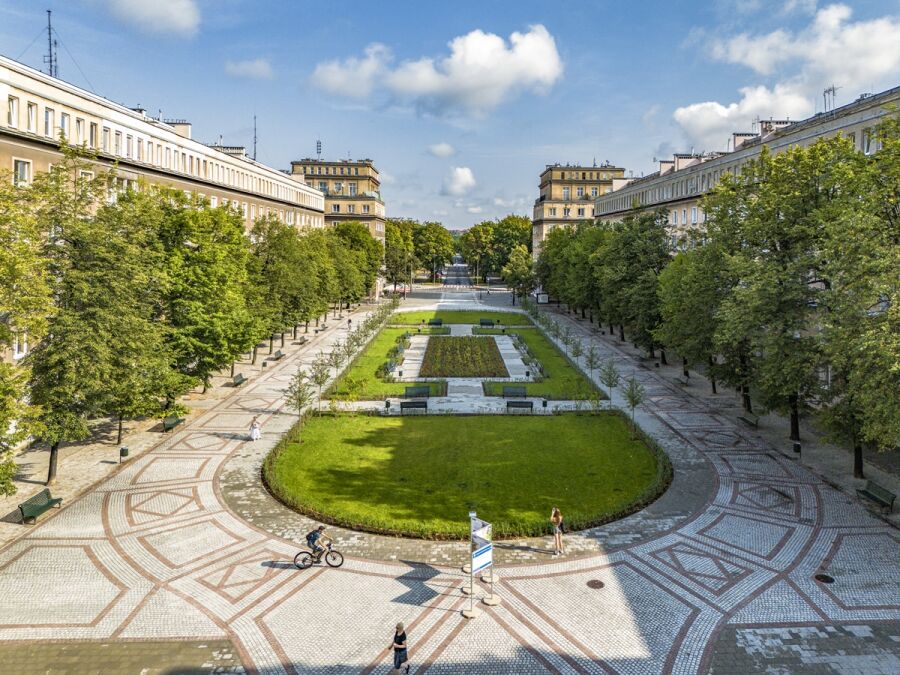
Przystąpienie Gminy Miejskiej Kraków do Stowarzyszenia ATRIUM jest kolejnym krokiem w promocji i docenieniu krajobrazu kulturowego Nowej Huty – tym razem na poziomie międzynarodowym. Ośrodek Kultury im. Cypriana Kamila Norwida w Krakowie jest punktem kontaktowym w sprawie szlaku. Reprezentuje również Miasto Kraków w pracach Zgromadzenia Ogólnego oraz działaniach promujących architekturę Nowej Huty.
Członkami Stowarzyszenia ATRIUM są między innymi miasta we Włoszech, Rumunii oraz Bułgarii, a główne zadania to: upowszechnianie wiedzy, ochrona i promocja europejskiego dziedzictwa związanego z architekturą i historią XX wieku, ze szczególnym uwzględnieniem okresów naznaczonych przez reżimy dyktatorskie i totalitarne w Europie, koordynowanie lokalnych europejskich tras wycieczkowych dotyczących architektury reżimów totalitarnych XX wieku w ramach jednego szlaku transgranicznego ATRIUM, prowadzenie we współpracy z uniwersytetami i ośrodkami badawczymi działań mających na celu wspieranie badań, wiedzy i poprawę stanu obiektów kulturowych i architektonicznych oraz tras wycieczkowych, promowanie turystyki kulturowej w zakresie dysonansowego dziedzictwa.
Oficjalna witryna Stowarzyszenia ATRIUM: www.atriumroute.eu.
„Nowe miasto” Nowa Huta
Zespół architektoniczny Nowej Huty, dzisiejszej dzielnicy Krakowa, odzwierciedla społeczną, kulturową i polityczną historię okresu powojennego. Jej powstanie było częścią szerszego trendu odbudowy po wojnie oraz idei „nowych miast”. Budowa kombinatu metalurgicznego i osiedla Nowa Huta miała służyć jako wzorcowe socjalistyczne miasto, realizujące ideały polskiego reżimu komunistycznego. Podstawowy układ urbanistyczny oraz znaczna część zabudowy Nowej Huty to dziedzictwo lat 50. XX wieku, podporządkowane wytycznym socrealizmu.
Mieszanka stylów
Jednak architektoniczno-urbanistyczny kompleks Nowej Huty to wszechstronna mieszanka stylów i nurtów powojennej architektury – od socrealizmu, przez modernizm, po postmodernizm. Dzielnica ta łączy różnorodne europejskie doświadczenia urbanistyczne. Tradycje narodowe oraz najważniejsze style zachodniej architektury XX wieku są tu znacznie bardziej widoczne niż w innych „nowych miastach” dawnego bloku wschodniego.
Modernizm spotyka socrealizm
Decyzję o budowie Nowej Huty podjęto 17 maja 1947 roku, a pierwsze budynki mieszkalne powstały w czerwcu 1949 roku. Choć pierwotny projekt oparto na zasadach modernizmu, został on dostosowany do panującej wówczas doktryny socrealizmu. Niemniej jednak sam układ urbanistyczny nawiązuje do idei modernistycznego miasta odpowiadającego potrzebom mieszkańców – z bliskością miejsca pracy, szkół, przedszkoli, a także obiektów handlowych i usługowych.
Miasto idealne
Układ przestrzenny Nowej Huty nawiązuje do renesansowej koncepcji miasta idealnego. W centrum nowego miasta, którego plan oparto na formie pięciokąta, znajduje się centralny plac, z którego promieniście wychodzi pięć głównych arterii. Budynki w środkowej części Nowej Huty powstały w stylu socrealistycznym. Jednak to właśnie w tej unikatowej dzielnicy Krakowa spotykają się najważniejsze style architektury XX wieku: socmodernizm, modernizm i postmodernizm.
Świadectwo przeszłości, inspiracja dla przyszłości
Dziś Nowa Huta przyciąga turystów zainteresowanych jej dziedzictwem architektonicznym, ale pozostaje także tętniącą życiem dzielnicą mieszkaniową z bogatą ofertą kulturalną. W 2004 roku układ urbanistyczny Nowej Huty został wpisany do rejestru zabytków jako świadectwo jej wartości historycznej i kulturowej. Od 2020 roku krajobraz kulturowy Nowej Huty jest chroniony jako Park Kulturowy. W 2023 roku Prezydent Rzeczypospolitej Polskiej uznał zespół architektoniczno-urbanistyczny Nowej Huty za Pomnik Historii. Dziedzictwo architektoniczne Nowej Huty to przypomnienie o burzliwej historii Polski oraz kluczowy element krajobrazu kulturowego Krakowa – świadectwo przeszłości i inspiracja dla przyszłych pokoleń.
Socrealizm
Podstawowy układ urbanistyczny Nowej Huty oraz znaczna część jej zabudowy to spuścizna lat 50. XX wieku i realizacja założeń socrealizmu. Nowa Huta miała być socjalistyczna w treści i narodowa w formie. W latach 1950–1956 wznoszono budynki w stylu socrealistycznym, harmonijnie łącząc je z wcześniejszą i późniejszą zabudową. Charakteryzują się one zwartą formą, gęstą zabudową i historyzującymi detalami – gzymsami, attykami. Wzdłuż głównych ulic tworzą one „ekrany” z pasażami, przelotami i lokalami usługowymi na parterze. Do najbardziej emblematycznych realizacji należą: domy przy Placu Centralnym (1952–1956, proj. J. Ingarden i T. Ptaszycki), Kino Świt (1951–1953, proj. A. Uniejewski), Teatr Ludowy (1954–1955, proj. M. i J. Ingardenowie oraz E. Dąbrowski), Kino Światowid (1955–1957, proj. A. Uniejewski), Szpital im. Stefana Żeromskiego (1952–1958, proj. S. Porębowicz i H. Skrzyński) oraz Centrum Administracyjne Huty (1952–1956, proj. M. i J. Ingardenowie oraz J. Ballenstedt).
Modernizm
Budynki powstałe po tzw. odwilży 1956 roku różniły się znacznie od wcześniejszej zabudowy socrealistycznej. Miały luźniejszy układ przestrzenny, były bardziej nowoczesne i często sytuowano je na obrzeżach osiedli. Część z nich zawierała sklepy w przyziemiach, usytuowane wzdłuż głównych ulic, ale powstawały też osobne pawilony handlowe i usługowe. Najciekawsze projekty modernistyczne znajdują się jednak w centralnej części Nowej Huty. Należą do nich m.in. Blok Szwedzki (1957–1959, proj. M. i J. Ingardenowie), Blok Francuski (1957–1959, proj. K. Chodorowski), Szkoła Podstawowa Tysiąclecia (1960–1961, proj. J. Gołąb) oraz Szkoła Muzyczna (1959–1974, proj. M. Jabłoński).
Postmodernizm
Od lat 80. XX wieku w Nowej Hucie zaczęto wznosić obiekty w duchu postmodernizmu, głównie w jej centralnej części. Jednym z najbardziej charakterystycznych przykładów jest osiedle Centrum E (1986–1995, proj. R. Loegler z zespołem) – barwne bloki w odcieniach niebieskiego, szarości i różu, które dziś stanowią rozpoznawalny element krajobrazu dzielnicy. Drugim wyróżniającym się przykładem jest klasztor cystersów z kościołem pw. Matki Bożej Częstochowskiej (1984–1994, proj. A. Nasfeter i K. Dyga). Architekci stworzyli tzw. „szklany dom”, którego szklany dach o krystalicznej strukturze oddaje ducha postmodernizmu i stanowi unikat w skali Krakowa.
[ENGLISH 🇬🇧 ]
Nowa Huta on the ATRIUM European Cultural Route
The Municipality of Krakow's accession to the ATRIUM Association is another step in the promotion and appreciation of the cultural landscape of Nowa Huta – this time at an international level. The Cyprian Kamil Norwid Cultural Centre in Krakow is the contact point for the route. It also represents the City of Kraków in the work of the General Assembly and in activities promoting the architecture of Nowa Huta.
Members of the ATRIUM Association include cities in Italy, Romania and Bulgaria, among others, and the association’s main tasks are: dissemination of knowledge, preservation and promotion of European heritage related to architecture and history of the 20th century, with a special focus on periods marked by dictatorial and totalitarian regimes in Europe, coordination of local European tours on the architecture of totalitarian regimes of the 20th century within the framework of a single ATRIUM cross-border route, carrying out activities in cooperation with universities and research centres to support research, knowledge and improvement of cultural and architectural sites and tours, promotion of cultural tourism on dissonant heritage.
Official website of the ATRIUM Association: www.atriumroute.eu.
'New city' Nowa Huta
The architectural ensemble of Nowa Huta, today a district of Krakow, reflects the social, cultural and political history of the post-war period. Its creation was part of a wider trend of post-war reconstruction and the idea of 'new cities'. The construction of the metallurgical combine and the Nowa Huta housing estate was intended to serve as a model socialist city, realising the ideals of the Polish communist regime. The basic urban layout and much of the development of Nowa Huta is a legacy of the 1950s, subordinated to the guidelines of socialist realism.
A mix of styles
However, the architectural and urban complex of Nowa Huta is a versatile mix of styles and currents of post-war architecture – from socialist realism to modernism to post-modernism. The district brings together diverse European urban experiences. National traditions and the most important styles of Western architecture of the 20th century are much more visible here than in other 'new cities' of the former Eastern Bloc.
Modernism meets socialist realism
The decision to build Nowa Huta was made on 17 May 1947 and the first residential buildings were constructed in June 1949. Although the original design was based on the principles of modernism, it was adapted to the then prevailing doctrine of socialist realism. Nevertheless, the urban layout itself is based on the idea of a modernist city responding to the needs of its inhabitants – with proximity to workplaces, schools, kindergartens, as well as retail and service facilities.
The ideal city
The spatial layout of Nowa Huta draws on the Renaissance concept of the ideal city. At the centre of the new city, whose plan is based on a pentagonal form, is a central square from which five main arteries radiate. The buildings in the central part of Nowa Huta were constructed in the socialist realist style. However, it is in this unique district of Krakow that the most important architectural styles of the 20th century meet: socmodernism, modernism and postmodernism.
Testimony to the past, inspiration for the future
Today, Nowa Huta attracts tourists interested in its architectural heritage, but it also remains a vibrant residential district with a rich cultural offer. In 2004, the urban layout of Nowa Huta was entered in the register of monuments as a testament to its historical and cultural value. Since 2020, the cultural landscape of Nowa Huta has been protected as a Cultural Park. In 2023, the President of the Republic of Poland recognised the architectural and urban complex of Nowa Huta as a Monument of History. The architectural heritage of Nowa Huta is a reminder of Poland's turbulent history and a key element of Krakow's cultural landscape – a testimony to the past and an inspiration for future generations.
Social realism
The basic urban layout of Nowa Huta and a significant part of its buildings are a legacy of the 1950s and the implementation of socialist realism. Nowa Huta was to be socialist in content and national in form. Between 1950 and 1956, buildings were erected in the socialist realist style, harmoniously combining them with earlier and later buildings. These are characterised by compact forms, dense spatial layout and historicising details such as cornices and attics. Along the main streets, they form 'screens' with passages, thoroughfares and ground floor retail units. Among the most emblematic realisations are the houses in Central Square (1952-1956), designed by J. Ingarden and T. Ptaszycki), the Świt Cinema (1951-1953, designed by A. Uniejewski), the People's Theatre (1954-1955, designed by M. and J. Ingarden and E. Dąbrowski), Światowid Cinema (1955-1957, designed by A. Uniejewski), Stefan Żeromski Hospital (1952-1958, designed by S. Porębowicz and H. Skrzyński) and the Administrative Centre of the Steelworks (1952-1956, designed by M. and J. Ingarden and J. Ballenstedt).
Modernism
The buildings constructed after the so-called 1956 thaw were very different from the earlier socialist realist buildings. They had a looser spatial layout, were more modern and were often located on the outskirts of housing estates. Some of these included ground-floor shops located along the main streets, but separate retail and service pavilions were also built. However, the most interesting modernist projects are located in the central part of Nowa Huta. These include the Swedish Block (1957-1959, designed by M. and J. Ingarden), the French Block (1957-1959, designed by K. Chodorowski), Millennium Primary School (1960-1961, designed by J. Gołąb), and the School of Music (1959-1974, designed by M. Jabłoński).
Postmodernism
Since the 1980s, buildings in the spirit of postmodernism began to be erected in Nowa Huta, mainly in its central part. One of the most striking examples is the Centrum E estate (1986-1995, designed by R. Loegler and his team) comprising colourful blocks in shades of blue, grey and pink that today form a recognisable part of the district's landscape. The second outstanding example is the Cistercian monastery with the Church of Our Lady of Częstochowa (1984-1994, designed by A. Nasfeter and K. Dyga). The architects created a so-called 'glass house', whose glass roof with a crystalline structure captures the spirit of postmodernism and is unique in Krakow.
[ITALIANO 🇮🇹 ]
Nowa Huta sull’Itinerario culturale europeo ATRIUM
L’adesione del Comune di Cracovia all’Associazione ATRIUM rappresenta un ulteriore passo nella promozione e valorizzazione del paesaggio culturale di Nowa Huta, questa volta a livello internazionale. Il Centro Culturale “Cyprian Kamil Norwid” di Cracovia è il punto di contatto per l’Itinerario. Rappresenta inoltre la città di Cracovia nell’Assemblea Generale e nelle attività di promozione dell’architettura di Nowa Huta.
I membri dell’Associazione ATRIUM comprendono, tra gli altri, città in Italia, Romania e Bulgaria. I principali obiettivi dell’Associazione sono: diffondere la conoscenza, tutelare e promuovere il patrimonio europeo legato all’architettura e alla storia del XX secolo, con particolare attenzione ai periodi segnati dai regimi dittatoriali e totalitari; coordinare gli itinerari locali europei sull’architettura dei regimi totalitari del Novecento nell’ambito di un unico percorso transfrontaliero ATRIUM; sviluppare, in collaborazione con università e centri di ricerca, attività volte a sostenere gli studi, accrescere le conoscenze e migliorare lo stato dei beni culturali e architettonici nonché degli itinerari; promuovere il turismo culturale legato al patrimonio dissonante.
Sito ufficiale dell’Associazione ATRIUM: www.atriumroute.eu.
La “città nuova” di Nowa Huta
Il complesso architettonico di Nowa Huta, oggi quartiere di Cracovia, riflette la storia sociale, culturale e politica del dopoguerra. La sua realizzazione faceva parte di una più ampia tendenza alla ricostruzione postbellica e dell’idea delle “città nuove”. La costruzione del complesso siderurgico e residenziale di Nowa Huta avrebbe dovuto costituire un modello di città socialista, attuando gli ideali del regime comunista polacco. L’assetto urbanistico di base e gran parte dei fabbricati di Nowa Huta costituiscono un’eredità degli anni Cinquanta, subordinata alle linee guida del realismo socialista.
Una commistione di stili
Tuttavia, il complesso architettonico e urbanistico di Nowa Huta rappresenta una commistione articolata di stili e correnti dell’architettura del dopoguerra, dal realismo socialista al modernismo fino al postmodernismo. Il quartiere unisce diverse esperienze urbanistiche europee. Le tradizioni nazionali e i principali stili dell’architettura occidentale del XX secolo sono qui molto più evidenti che in altre “città nuove” dell’ex blocco orientale.
Il modernismo incontra il realismo socialista
La decisione di costruire Nowa Huta fu presa il 17 maggio 1947 e i primi edifici residenziali sorsero nel giugno 1949. Sebbene il progetto originario si fondasse sui principi del modernismo, fu adattato alla dottrina del realismo socialista allora dominante. Nondimeno, l’assetto urbanistico stesso richiama l’idea di una città modernista capace di rispondere alle esigenze dei suoi abitanti, con la prossimità ai luoghi di lavoro, alle scuole, agli asili, nonché alle strutture commerciali e di servizio.
Città ideale
L’assetto spaziale di Nowa Huta richiama il concetto rinascimentale di città ideale. Al centro della città nuova, la cui pianta si basa su una forma pentagonale, si trova una piazza centrale da cui si diramano cinque arterie principali. Gli edifici della parte centrale di Nowa Huta furono realizzati nello stile del realismo socialista. Tuttavia, è proprio in questo quartiere unico di Cracovia che si incontrano i principali stili architettonici del XX secolo: socialrealismo, modernismo e postmodernismo.
Testimonianza del passato, ispirazione per il futuro.
Oggi Nowa Huta attrae turisti interessati al suo patrimonio architettonico, oltre a essere un vivace quartiere residenziale con una ricca offerta culturale. Nel 2004 l’impianto urbanistico di Nowa Huta è stato iscritto nel registro dei beni culturali quale testimonianza del suo valore storico e, appunto, culturale. Dal 2020 il paesaggio culturale di Nowa Huta è tutelato come Parco Culturale. Nel 2023 il Presidente della Repubblica di Polonia ha riconosciuto il complesso architettonico e urbanistico di Nowa Huta come Monumento Storico. Il patrimonio architettonico di Nowa Huta richiama la turbolenta storia della Polonia ed è un elemento fondamentale del paesaggio culturale di Cracovia: testimonianza del passato e ispirazione per le generazioni future.
Realismo socialista
L’assetto urbanistico di base di Nowa Huta e gran parte degli edifici che vi sorgono costituiscono l’eredità degli anni Cinquanta e l’attuazione pratica dei principi del realismo socialista. Nowa Huta era concepita come socialista nei contenuti e nazionale nella forma. Tra il 1950 e il 1956 furono eretti fabbricati in stile socialrealista, che si integrano armoniosamente con le costruzioni precedenti e successive. Sono caratterizzati da forme compatte, da una densa edificazione e da dettagli storicizzanti – cornicioni, attici. Lungo le strade principali formano delle “quinte” con portici, passaggi e spazi commerciali al piano terra. Tra le realizzazioni più emblematiche si annoverano: le case presso la Piazza Centrale (1952–1956, progetto di J. Ingarden e T. Ptaszycki), il Cinema Świt (1951–1953, progetto di A. Uniejewski), il Teatro Popolare (1954–1955, progetto di M. e J. Ingarden con E. Dąbrowski), il Cinema Światowid (1955–1957, progetto di A. Uniejewski), l’Ospedale intitolato a Stefan Żeromski (1952–1958, progetto di S. Porębowicz e H. Skrzyński) e il Centro Amministrativo dell’Acciaieria (1952–1956, progetto di M. e J. Ingarden con J. Ballenstedt).
Modernismo
Gli edifici realizzati dopo il cosiddetto disgelo del 1956 si distinguevano nettamente dalla precedente edificazione del realismo socialista. Avevano un assetto spaziale più libero, erano più moderni e spesso venivano collocati ai margini dei quartieri residenziali. Alcuni di essi ospitavano negozi al piano terra, situati lungo le strade principali, mentre furono costruiti anche padiglioni separati a destinazione commerciale e di servizio. I progetti modernisti più interessanti si trovano tuttavia nella parte centrale di Nowa Huta. Tra questi si annoverano, tra l’altro, il Blocco Svedese (1957–1959, progetto di M. e J. Ingarden), il Blocco Francese (1957–1959, progetto di K. Chodorowski), la Scuola Elementare del Millennio (1960–1961, progetto di J. Gołąb) e la Scuola di Musica (1959–1974, progetto di M. Jabłoński).
Postmodernismo
A partire dagli anni Ottanta, a Nowa Huta iniziarono ad apparire edifici ispirati al postmodernismo, soprattutto nella sua parte centrale. Uno degli esempi più caratteristici è il complesso residenziale Centrum E (1986–1995, progetto di R. Loegler con il suo team): vivaci palazzi nelle tonalità del blu, del grigio e del rosa, che ai nostri giorni costituiscono un elemento riconoscibile del paesaggio del quartiere. Un secondo esempio di rilievo è il monastero cistercense con la chiesa dedicata a Nostra Signora di Częstochowa (1984–1994, progetto di A. Nasfeter e K. Dyga). Gli architetti hanno realizzato la cosiddetta “casa di vetro”, il cui tetto vetrato dalla struttura cristallina richiama lo spirito del postmodernismo e costituisce un unicum a livello dell’intera città.
| Nazwa | Kategoria | Mapa |
|---|---|---|
Arka Panaul. Obrońców Krzyża 1 Kraków |
Nowa Huta na Europejskim Szlaku Kulturowym ATRIUM | |
Blok FrancuskiOsiedle Centrum B 8 Kraków |
Nowa Huta na Europejskim Szlaku Kulturowym ATRIUM | |
Blok HelikopterOsiedle Centrum D 8 Kraków |
Nowa Huta na Europejskim Szlaku Kulturowym ATRIUM | |
Blok SzwedzkiOsiedle Szklane Domy 1 Kraków |
Nowa Huta na Europejskim Szlaku Kulturowym ATRIUM | |
Centrum Administracyjne Hutyul. Ujastek 1 Kraków |
Nowa Huta na Europejskim Szlaku Kulturowym ATRIUM | |
Kino ŚwiatowidOsiedle Centrum E 1 Kraków |
Nowa Huta na Europejskim Szlaku Kulturowym ATRIUM | |
Kino ŚwitOsiedle Teatralne 10 Kraków |
Nowa Huta na Europejskim Szlaku Kulturowym ATRIUM | |
Klasztor cystersów i kościół pw. Matki Bożej Częstochowskiej i bł. Wincentego KadłubkaOsiedle Szklane Domy 7 Kraków |
Nowa Huta na Europejskim Szlaku Kulturowym ATRIUM | |
Osiedle Centrum EOsiedle Centrum E Kraków |
Nowa Huta na Europejskim Szlaku Kulturowym ATRIUM | |
Ośrodek Kultury Norwida i Galeria Huta SztukiOsiedle Górali 5 Kraków |
Nowa Huta na Europejskim Szlaku Kulturowym ATRIUM | |
Plac Centralny i Aleja RóżAleja Róż Kraków |
Nowa Huta na Europejskim Szlaku Kulturowym ATRIUM | |
Plac Przy PoczciePlac Przy Poczcie 1 Kraków |
Nowa Huta na Europejskim Szlaku Kulturowym ATRIUM | |
Szkoła MuzycznaOsiedle Centrum E 2 Kraków |
Nowa Huta na Europejskim Szlaku Kulturowym ATRIUM | |
Szkoła tysiąclatka i Krzyż NowohuckiOsiedle Teatralne 35 Kraków |
Nowa Huta na Europejskim Szlaku Kulturowym ATRIUM | |
Szpital im. S. ŻeromskiegoOsiedle Na Skarpie 66 Kraków |
Nowa Huta na Europejskim Szlaku Kulturowym ATRIUM | |
Teatr LudowyOsiedle Teatralne 34 Kraków |
Nowa Huta na Europejskim Szlaku Kulturowym ATRIUM | |
Technikum hutniczo-mechaniczneOsiedle Stalowe 16 Kraków |
Nowa Huta na Europejskim Szlaku Kulturowym ATRIUM |